

2026 guide for Indian investors & founders LRS-ready guidance

Mauritius Investor Permit for Indian Citizens (2026)

Planning to set up a business in Mauritius from India? This guide explains the 2026 EDB rules, how to incorporate your Mauritian company, how to remit your capital under the RBI's Liberalised Remittance Scheme, and the tax points to know. Prefer us to handle it end to end? See our Investor Permit Mauritius service.

  • USD 100,000minimum investment USD 50,000
  • USD 250,000LRS limit per person, per financial year
  • MUR 5Mannual turnover from Year 3
  • Up to 10 yrspermit, renewable, with family
  • Free, no-obligation call
  • Reply within 24 hours
  • Fully remote from India
how to check mauritius work permit online

Client Review

★★★★★
“

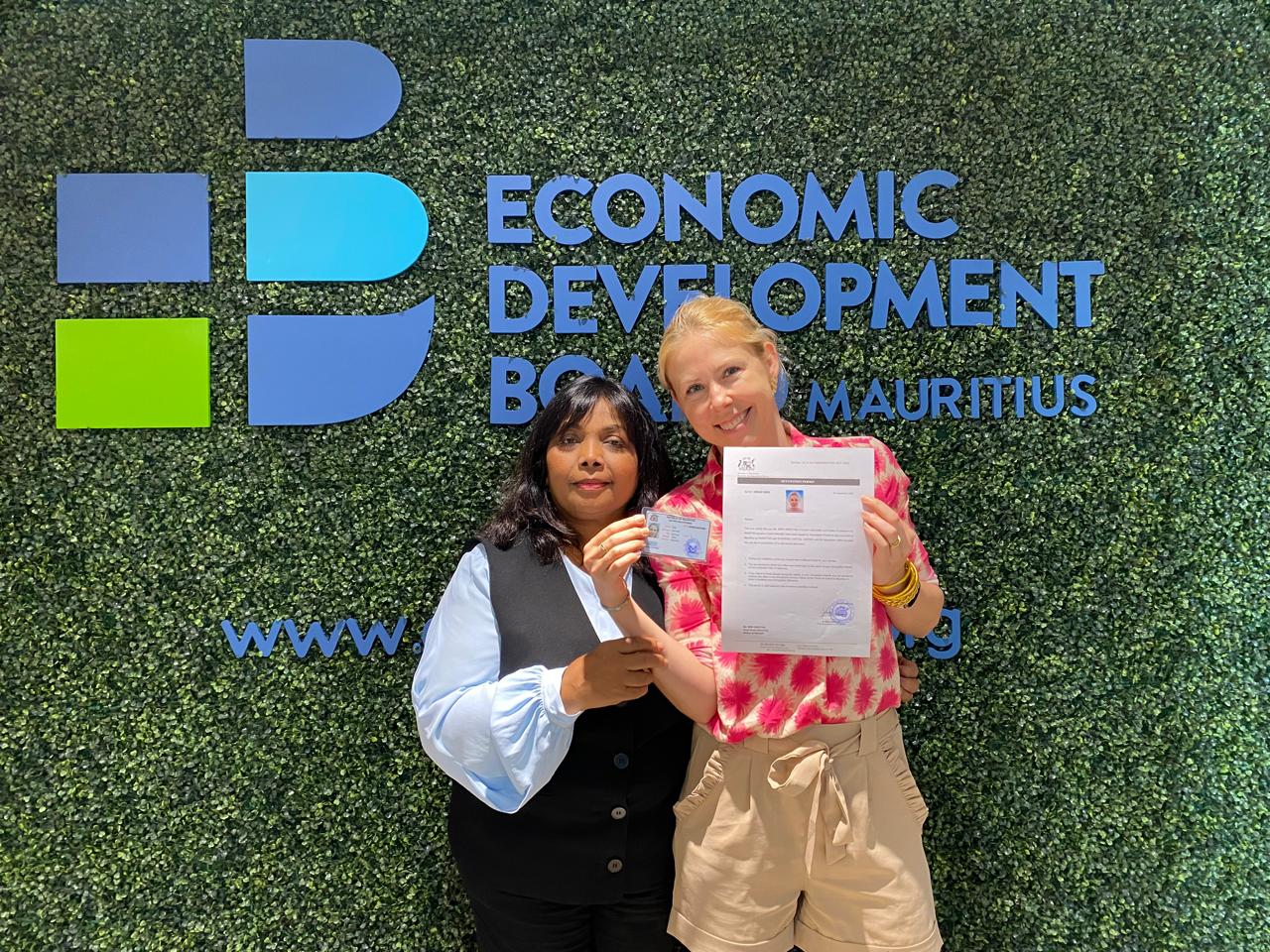
I cannot recommend Nina Bagha highly enough. She accompanied me throughout the process of obtaining my Investor Occupation Permit in Mauritius, and her support made an enormous difference.

Nina is extremely professional, patient and genuinely committed to her clients. She provided clear guidance at every stage, was always available to answer my questions, and ensured the process was as smooth as possible. Her knowledge, reliability and personal involvement gave me complete confidence.

Kristyna - Investor Occupation Permit Client
Kristyna Investor Occupation Permit Client
how to check mauritius work permit online
Written by Nina Bagha • Founder & Director, DNB HR Associates Ltd • Updated October 2026
Requirements & remittance

2026 EDB Requirements & RBI Remittance Framework

Two sets of rules apply to Indian investors: the Mauritian EDB's investment criteria, and the Reserve Bank of India's rules for sending the money out of India.

EDB requirement

The USD 100,000 capital requirement

USD 100,000minimum, or the equivalent in another foreign currency USD 50,000 before 2026

Under the 2026 EDB framework, standard Investor Permit applicants invest at least USD 100,000 in their newly incorporated Mauritian company. You show proof of funds when you apply, and the money is transferred to the company's bank account within 60 days of the permit being issued.

The company must also reach at least MUR 5 million annual turnover from Year 3. See the full 2026 Investor Permit requirements.

Key advantage: it stays your money

The USD 100,000 is not an entry fee or a non-refundable government payment. It remains your company's working capital, fully available for:

  • Business growth
  • Staffing
  • Equipment
  • Operating expenses
RBI compliance

Remitting your capital from India

Transfers from India go through your Authorised Dealer (AD) bank and must follow the RBI's Overseas Investment framework. The right route depends on who is investing.

Resident individuals

Liberalised Remittance Scheme (LRS)

Up to USD 250,000

per person, per financial year. Investing in the equity of your Mauritian company counts as overseas direct investment made within this limit.

  • The Mauritian company must be an operating business
  • It cannot be a financial services company
  • If you control it, it should not set up its own subsidiaries

Indian companies & LLPs

Overseas Direct Investment (ODI)

Up to 400% of net worth

An existing Indian company or LLP can fund a Mauritian subsidiary under the automatic route, within 400% of its net worth (last audited balance sheet).

  • Reporting to the AD bank, which allots a Unique Identification Number
  • Annual Performance Report on the Mauritian entity
  • Check how the structure affects your personal permit eligibility

TCS on LRS remittances: Tax Collected at Source may apply to amounts above ₹10 lakh a year. It is not an extra tax: you can claim it back in your income tax return. Confirm the current rate with your bank.

Source of funds: both the RBI rules and Mauritian anti-money laundering (AML) checks require clear documentation of where the money comes from. We prepare the Mauritian side and work alongside your Indian CA and AD bank.

Get your remittance and permit right the first time

We align your company structure, source-of-funds file and EDB application, so your bank, the RBI and the EDB all see the same, consistent picture.

General information only, current at October 2026; not legal, tax or foreign-exchange advice. RBI rules are applied by your AD bank, so confirm your route with your bank and Chartered Accountant. Source for EDB criteria: EDB, August 2026.

Why Mauritius for Indian businesses

Strategic Advantages & Tax Alignment for Indian Businesses

An active business base in Mauritius gives Indian founders two things: preferential access to African markets, and a clear, competitive tax framework that works alongside the India–Mauritius treaty.

1 · Gateway to African & global trade

A launch pad into Africa

Mauritius belongs to Africa's main trade blocs. Indian exporters, manufacturers and service providers can use a Mauritian base to access these markets on preferential terms, subject to each agreement's rules of origin.

Read more in the EDB's Africa Strategy.

  • COMESACommon Market for Eastern and Southern Africa
  • SADCSouthern African Development Community
  • AfCFTAAfrican Continental Free Trade Area
  • CECPAIndia–Mauritius trade agreement in force since 2021
2 · Tax efficiency & transparency

A competitive, transparent tax system

15%Corporate tax & VAT

15% standard corporate tax rate and 15% standard VAT.

Personal income tax is progressive at 0%, 10% and 20%. A temporary 5% contribution applies to company profits above MUR 24M (2026–2029).
0%Capital gains tax

No capital gains tax in Mauritius on the sale of company shares or business assets.

India may still tax gains on shares of Indian companies (see the treaty below).
0%Withholding on dividends

Dividends paid by Mauritian companies to foreign shareholders bear no Mauritian withholding tax.

If you remain resident in India, those dividends are taxable in India.
0%Inheritance tax

No inheritance tax and no wealth tax in Mauritius.

Indian rules continue to apply to assets and heirs in India.
3 · The India–Mauritius DTAA

Relief from double taxation

The long-standing India–Mauritius Double Taxation Avoidance Agreement prevents the same income being taxed twice and sets out which country taxes what.

Since the 2016 protocol: capital gains on shares of Indian companies acquired from April 2017 can be taxed in India. The treaty is no longer a way to sell Indian shares tax-free; its value today is for genuine businesses operating from Mauritius.

Substance is essential

Make your Mauritius business real

Treaty benefits and Mauritian tax residence depend on genuine commercial substance. A Mauritian company that is in practice run from India can be treated as Indian tax resident under India's place-of-effective-management rules.

  • Board decisions taken in Mauritius
  • Registered office and administration in Mauritius
  • Resident director support where required

We set this up as part of your company registration in Mauritius.

Build a Mauritius base that stands up to scrutiny

We structure your company, substance and Investor Permit together, and work alongside your Indian CA on the India side.

General information only, current at October 2026; not tax or legal advice. Take advice from a qualified Chartered Accountant in India and a tax adviser in Mauritius on your own structure.

India to Mauritius

Step-by-Step Application Pathway

From incorporating your Mauritian company to holding your Investor Occupation Permit, the journey follows a clear four-stage roadmap. Almost all of it can be handled while you are still in India.

  1. Step 1Business plan & company setup
  2. Step 2Bank account & RBI remittance
  3. Step 3Online filing via NELS
  4. Step 4Approval & permit in Mauritius
  1. CBRIS & BRNFrom India

    Business plan & incorporation via CBRIS

    We help you draft an EDB-compliant business plan tailored to your activity, with turnover projections towards the 2026 turnover targets.

    At the same time, your company is registered through the Companies and Businesses Registration Integrated System (CBRIS), giving you your Certificate of Incorporation and Business Registration Number (BRN). Company registration in Mauritius →

  2. BankingFrom India

    Corporate banking & RBI remittance

    Once the company is formed, it opens a corporate bank account in Mauritius. You provide proof of funds and a written undertaking to transfer the USD 100,000 with your application. The money is later remitted from India through your AD bank under the RBI rules: LRS for individuals, or the overseas investment route for Indian companies.

    When the money moves: the USD 100,000 is remitted from India to your Mauritian company account within 60 days of the permit being issued, not before you apply. Plan the LRS paperwork with your bank in advance.

  3. NELSFrom India

    Online filing via the NELS portal

    Your permit application is submitted remotely through the National E-Licensing System (NELS), overseen by the EDB. The non-refundable USD 50 application fee is paid at this stage.

  4. AIP · 15–20 working daysIn Mauritius

    Approval in Principle & relocation

    The EDB typically reviews a complete file within 15 to 20 working days. Once you receive your Approval in Principle (AIP) letter, you have 90 days to travel to Mauritius and complete the local formalities:

    1. A medical screening at an accredited laboratory in Mauritius
    2. Presenting your original documents, including your passport and Police Clearance Certificate (issued in India through Passport Seva), at the Passport and Immigration Office in Port Louis
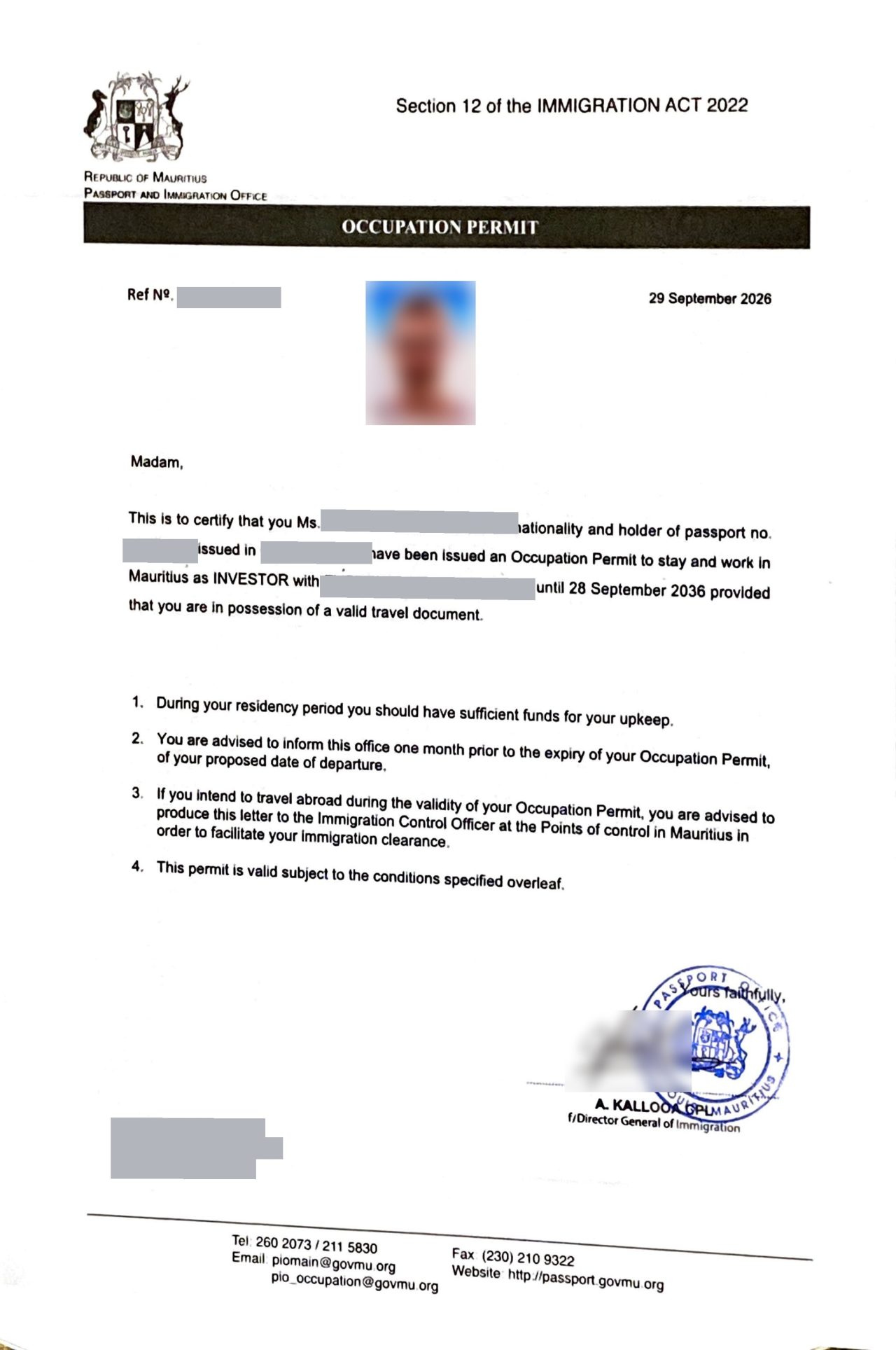
    3. Collecting your Investor Occupation Permit, valid for up to 10 years

    Travelling on an Indian passport: Indian nationals can usually enter Mauritius visa-free for up to 60 days for visits, which also suits a scouting trip before you apply. That entry does not allow you to work; you start operating once your Occupation Permit is issued.

    Bringing your family? Their permits are prepared alongside yours. Planning ahead? Read about permanent residency in Mauritius.

We coordinate all four steps for you

Company, bank account, NELS filing and appointments in Port Louis: DNB manages the whole process from Ebène while you prepare your move from India.

Timelines are indicative and depend on your file and on the authorities' workload. Procedures and fees may change; approval rests with the Mauritian authorities.

Your future in Mauritius

Family Inclusion & 20-Year Permanent Residency Pathway

Your Investor Permit covers your family too. And for Indian investors seeking long-term stability, it opens a route to 20-year permanent residence after five years.

Family & dependent permits

Who can join you as a dependant

  • Spouse or legal partnerResidence for the same duration as your own permit.
  • Dependent childrenUnmarried dependent children, generally up to the age of 24, subject to the rules in force.
  • Dependent parentsParents who depend on you can also be sponsored.
  • Live in Mauritius for as long as your Investor Permit, up to 10 years
  • Schooling at leading international schools offering Cambridge and IB programmes
  • Healthcare in good private clinics; international health insurance is strongly recommended
Transition to permanent residence

A 20-Year Permanent Residence Permit

5 years

After holding your Investor Permit for 5 continuous years, you can apply for a 20-year Permanent Residence Permit (PRP) if your Mauritian company meets one of these turnover milestones:

  1. Year 0Investor Permit
  2. Years 1–5Grow turnover
  3. From Year 5Apply for PRP
Option A · AnnualMUR 15Mturnover a year, over the 5 years before you apply
Option B · AggregateMUR 75Mtotal turnover across the 5-year period

Plan early: these thresholds are far higher than the renewal targets (MUR 5M, then 8M a year). Full details in our permanent residency guide.

Planning a move with your family?

We prepare your family's permits alongside yours, and build your business plan with permanent residence in mind from day one.

Eligibility for dependants and permanent residence is decided by the Mauritian authorities under the guidelines in force at the time of application.

Common questions

Frequently Asked Questions

The questions Indian founders and investors ask us most often about setting up in Mauritius.

Can an Indian citizen start the Mauritius Investor Permit process from India?
Yes. Company incorporation through CBRIS, business plan preparation and the EDB application on the NELS portal are all handled online while you remain in India. You only travel to Mauritius after receiving your Approval in Principle (AIP), within 90 days. See the step-by-step pathway.
Do Indian passport holders need a visa to travel to Mauritius for the final formalities?
No visa is needed in advance. Indian nationals can usually enter Mauritius visa-free for up to 60 days for visits, which covers the trip to Port Louis for your medical screening and permit collection. That visitor entry does not allow you to work; you can operate your business once your Occupation Permit is issued.
How long does the entire process take from India?
From preparing your business plan and incorporating your company to collecting your permit, the process typically takes 2 to 4 months. The EDB usually issues Approval in Principle within 15 to 20 working days of a complete application.
Can I send the USD 100,000 from India under the LRS?
Yes. Resident individuals can remit up to USD 250,000 per financial year under the Liberalised Remittance Scheme, through their Authorised Dealer bank. Investing in your Mauritian operating company falls within this limit. Indian companies and LLPs can use the overseas direct investment route instead. See RBI remittance rules.
Is TCS charged when I remit the capital from India?
Tax Collected at Source may apply to LRS remittances above ₹10 lakh in a financial year. It is not an additional tax: it is credited against your income tax and can be claimed back in your return. Confirm the current rate with your bank before remitting.
Will moving to Mauritius end my tax obligations in India?
Not automatically. Your Indian tax residence depends on the days you spend in India and your Indian income. The India–Mauritius tax treaty decides which country taxes what, and since 2017 India can tax gains on shares of Indian companies. Take advice from your Chartered Accountant before you move. See tax alignment for Indian businesses.
Can my family move to Mauritius with me?
Yes. Your spouse, unmarried dependent children and dependent parents can apply for residence permits linked to your Investor Permit, for the same duration. See family and permanent residency.
Is there a cheaper alternative to the Investor Permit?
If you will work alone, providing your own professional services, the Self-Employed Permit requires a lower initial investment. It does not suit a trading company with staff. Read about the Self-Employed Permit in Mauritius.
India to Mauritius

Expand Your Business from India to Mauritius

A corporate presence in Mauritius opens doors to international markets, a competitive tax framework and a high quality of life for your family. DNB HR Associates provides end-to-end guidance on company registration, EDB business plan structuring, administrative compliance and residency processing.

From your first call to your permit in hand, our team in Ebène works with you and your Indian CA every step of the way. Learn more about our Investor Permit Mauritius service.

Book a private consultation Discuss your expansion plans with our team in Ebène, Mauritius. Free, with a reply within 24 hours. Schedule an Investor Consultation
Check your eligibility Our online assessment gives an initial indication of your fit for the Investor Permit in 5–7 minutes. Free preview; full result USD 49. Check Your Investor Permit Eligibility
  • Fully remote from India
  • Team based in Ebène, Mauritius
  • Prefer WhatsApp? Message us

General information only, not tax or legal advice. Approval of all permits rests with the Mauritian authorities.

DNB HR ASSOCIATES Mauritius Permit
Eligibility Check
QUESTION 7 OF 12

What best describes your current position?

I have a Mauritius job offer
I am planning a business project
I work independently
I plan to retire in Mauritius
Continue →
Your pathway, made clearer

A guided assessment built around your real plans

The DNB assessment turns broad ambitions—such as moving, working or starting a business in Mauritius—into a clearer starting point for the right permit conversation.

Five pathways considered

Investor, Professional, Self-Employed, Retired Non-Citizen and Young Professional.

Personalised indication

Your answers shape the pathway direction and the next factors to explore.

Simple, focused questions

Designed for people who do not yet know the technical permit terminology.

Private next step

Use the result to explore the right route or request confidential DNB guidance.

Nina Bagha

Nina Bagha

Nina Bagha Founder & Director, DNB HR Associates Ltd Founder & Director, DNB HR Associates Ltd Nina Bagha is the Founder and Director of DNB HR Associates Ltd, a Mauritius-based HR consultancy providing human resource, business setup and immigration support services. Through DNB HR Associates, she works with international investors, professionals and businesses seeking to establish or expand their presence in Mauritius, including support with company setup and Occupation Permit applications.

Personalised Immigration Guidance

Need Personalised Advice?

Every investor's circumstances are different. The pathway to permanent residence involves business performance, documentation, and timing considerations that are best assessed against your specific situation.

Our Mauritius-based team can help you plan your long-term strategy, from the initial Investor Occupation Permit through to permanent residence.

Contact DNB HR Associates →

Our Happy Clients